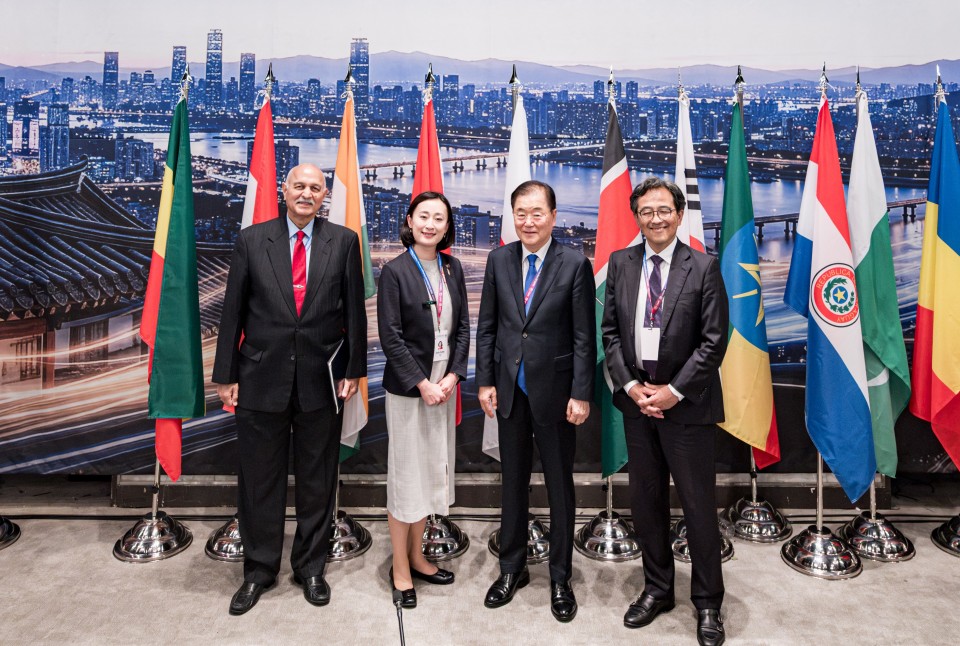
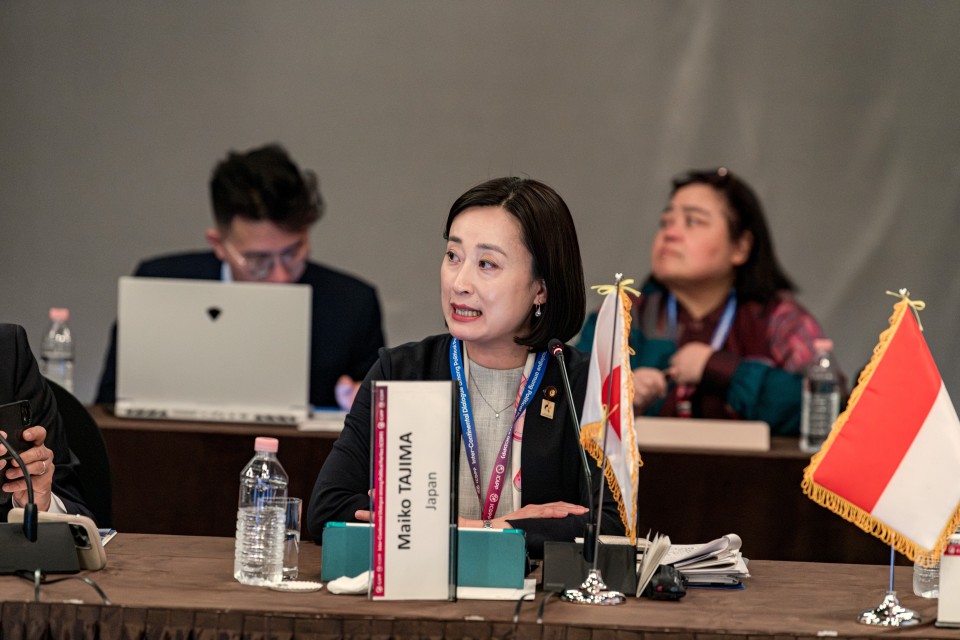
Maiko Tajima, Director of the International Department of the Constitutional Democratic Party of Japan (CDP) and a Senator, participated in the first Inter-Continental Dialogue among Political Parties (ICDPP), held in Seoul, Republic of Korea, from September 6 to 9. She was accompanied by Kenichi Suzuki, Senior Adviser to the International Department.
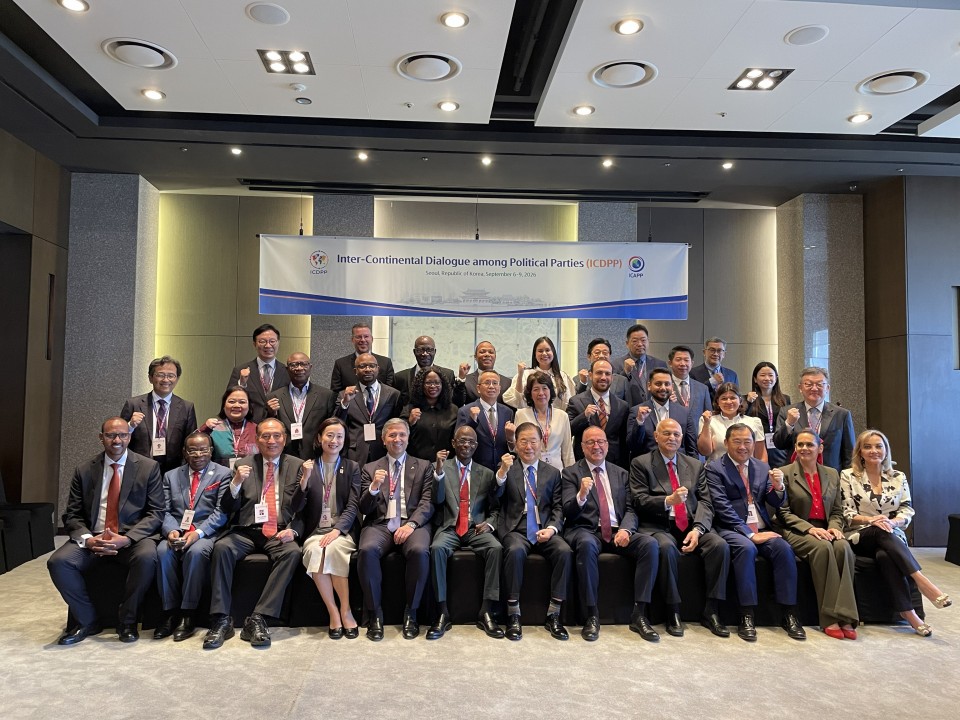
The ICDPP is a newly established framework aimed at promoting dialogue among political parties across regions and ideological differences. It was launched under the leadership of Chung Eui-yong, Chair of the Standing Committee of the International Conference of Asian Political Parties (ICAPP) and former Minister of Foreign Affairs of the Republic of Korea, and others.
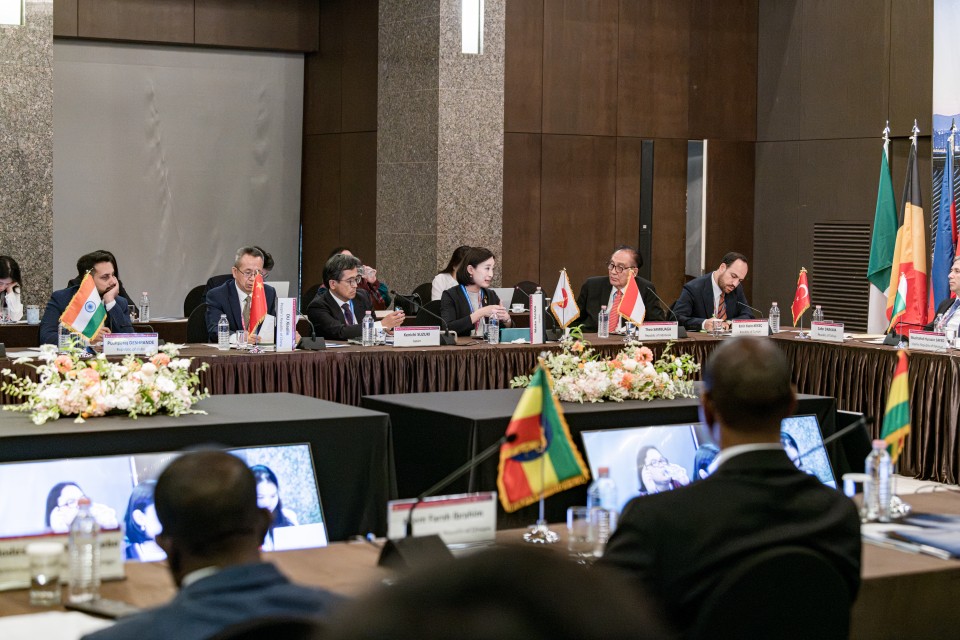
Representatives of major political parties from around the world—including 19 governing parties and 4 opposition parties—attended the meeting. Participants included the Deputy Prime Minister of Ethiopia, senior government officials, former cabinet ministers, parliamentarians, and party leaders. The CDP was the only political party from Japan invited to participate.
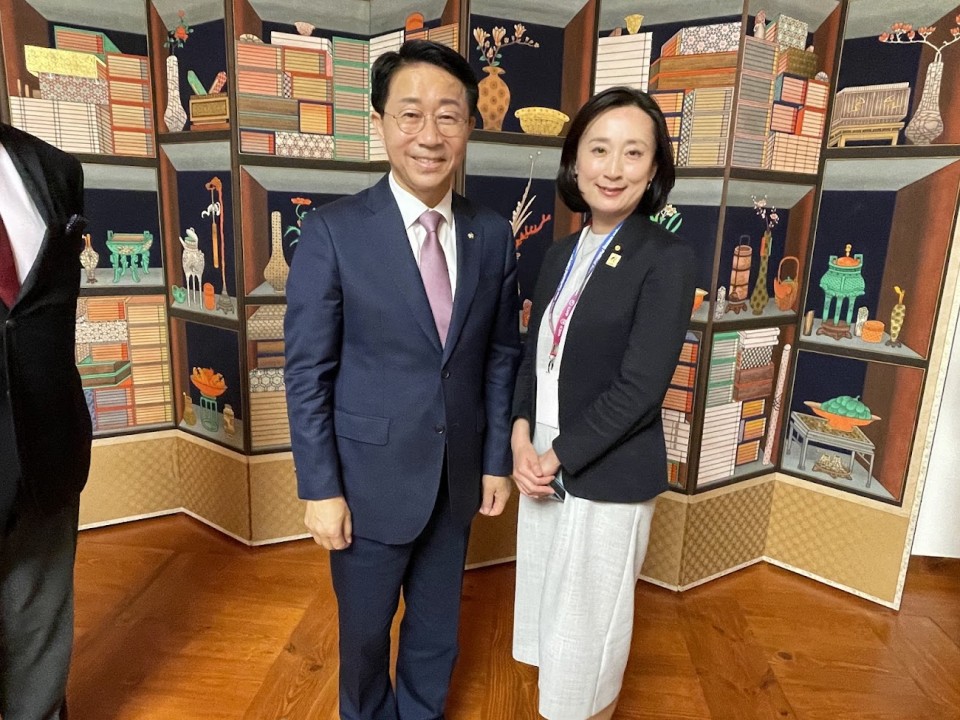
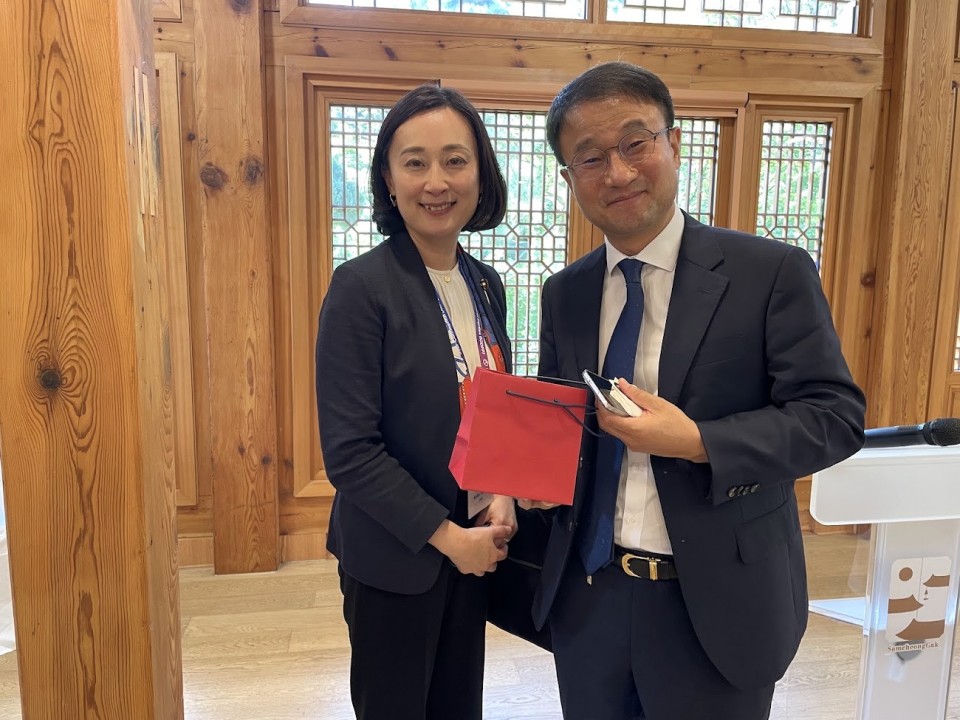
During her stay, Tajima also met with Cho Jung-sik, Speaker of the National Assembly of the Republic of Korea, and Han Hyeon-do, Floor Leader of the Democratic Party of Korea, and exchanged views on Japan–ROK relations and inter-party exchanges.
Reflecting on the meeting, Tajima said: “If I had to describe it in just a few words, it was like a United Nations General Assembly for political parties, with a wide range of parties coming together from Africa, Latin America, Asia, and Europe.
”She cited the expansion of the CDP’s network with political party representatives from different regions as the greatest achievement of its participation, adding: “Another important achievement was that we were able to properly explain what kind of political party the Constitutional Democratic Party of Japan is.”
Emphasizing the importance of dialogue across regions and ideologies
At the first plenary session, Tajima explained that the CDP places great importance on democracy, international human rights, and peace.Against the backdrop of growing regional divisions, she stated that “open dialogue is not a luxury—it is a necessity,” and welcomed the inclusive character of the ICDPP, which brings together political parties across regional and ideological lines.
She also expressed hope that the ICDPP would develop into a sustained platform through which political parties can continue dialogue and build trust even when dialogue between governments becomes difficult.
Proposals on AI and democracy, and international law and the rule of law
At the second plenary session, titled “Political Parties in an Era of Geopolitical Uncertainty: Challenges, Responsibilities, and Global Cooperation,” Tajima proposed two issues as concrete items for the ICDPP’s future agenda: AI and democracy, and international law and the rule of law.
On AI, she pointed out that disinformation can undermine public trust and democratic processes, and proposed that political parties consider voluntary common principles for the responsible use of AI and digital information, including during elections.
She also proposed making international law and the rule of law a standing agenda item for the ICDPP and, where appropriate, issuing joint statements calling for dialogue, humanitarian protection, and respect for international law.
Referring to the mission of the International Criminal Court (ICC), she stressed the importance of continuing to uphold the rule of law in the 21st century.
“Seoul Declaration” adopted unanimously
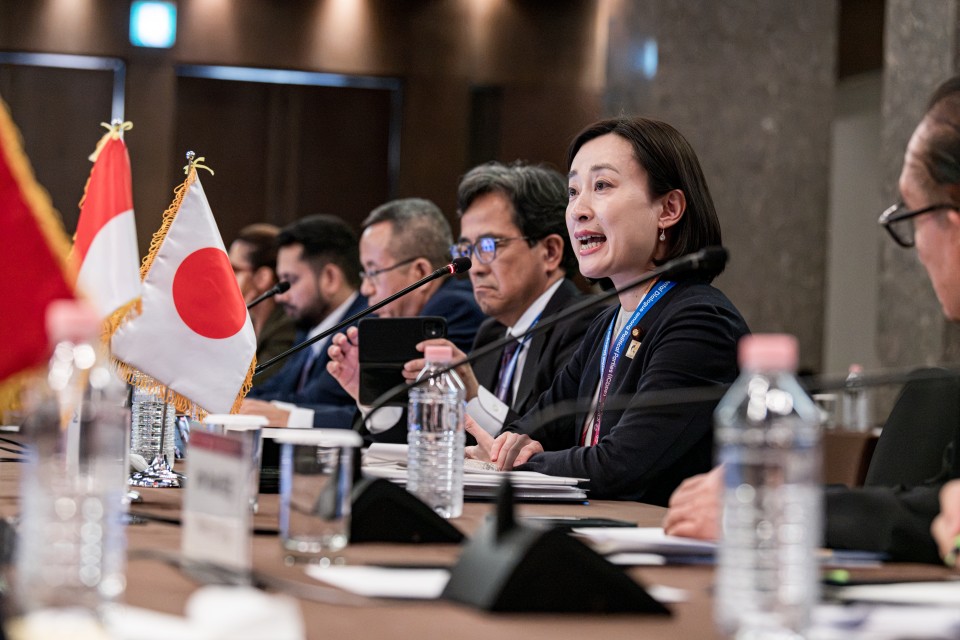
The “Seoul Declaration,” adopted unanimously at the meeting, reaffirmed participants’ commitment to the purposes and principles of the United Nations Charter, sustainable development and shared prosperity, the promotion and protection of human rights, social justice, the rule of law, and multilateralism.
Participants agreed to develop the ICDPP as an inclusive forum for dialogue among political parties across differences in region, ideology, and governing or opposition status.
The Declaration concluded by expressing a shared determination to promote:“dialogue over dispute, cooperation over confrontation, and partnership over polarization.”